


 BEST BRAND
 BEST SELLER
 FIND STORE NEARBY
 WARRANTY REGISTRATION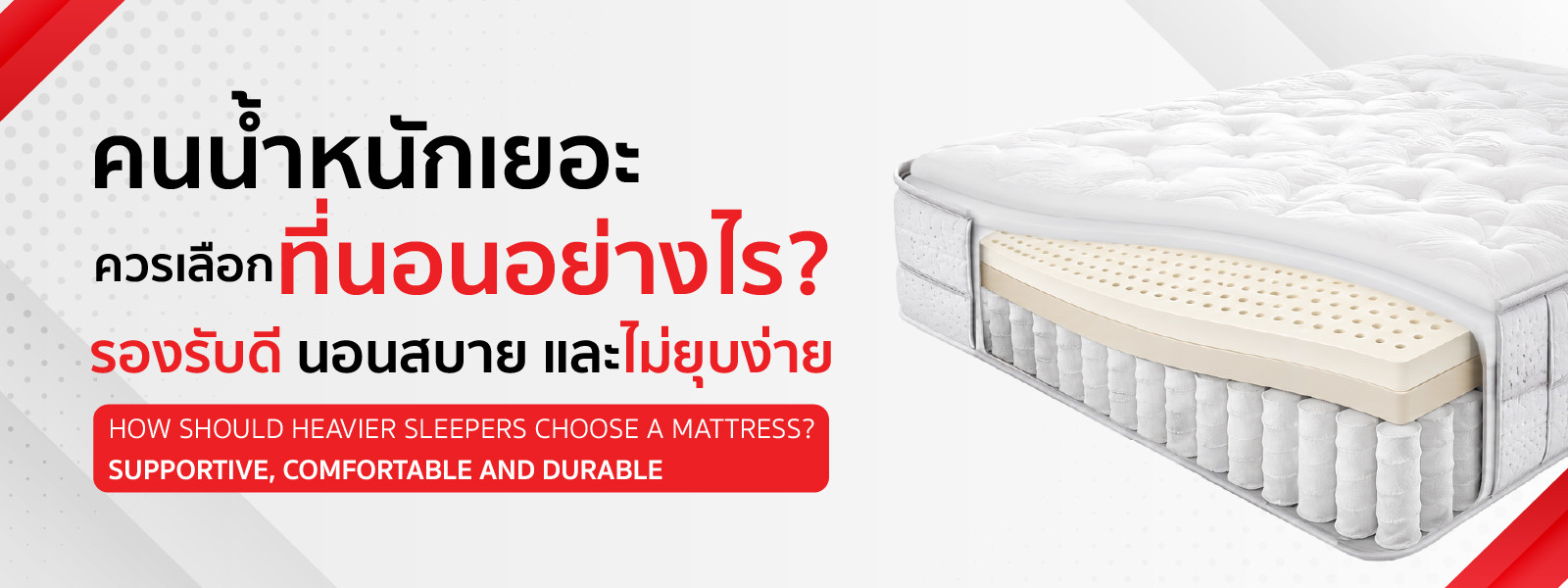
Supportive, Comfortable, and Less Likely to Sag
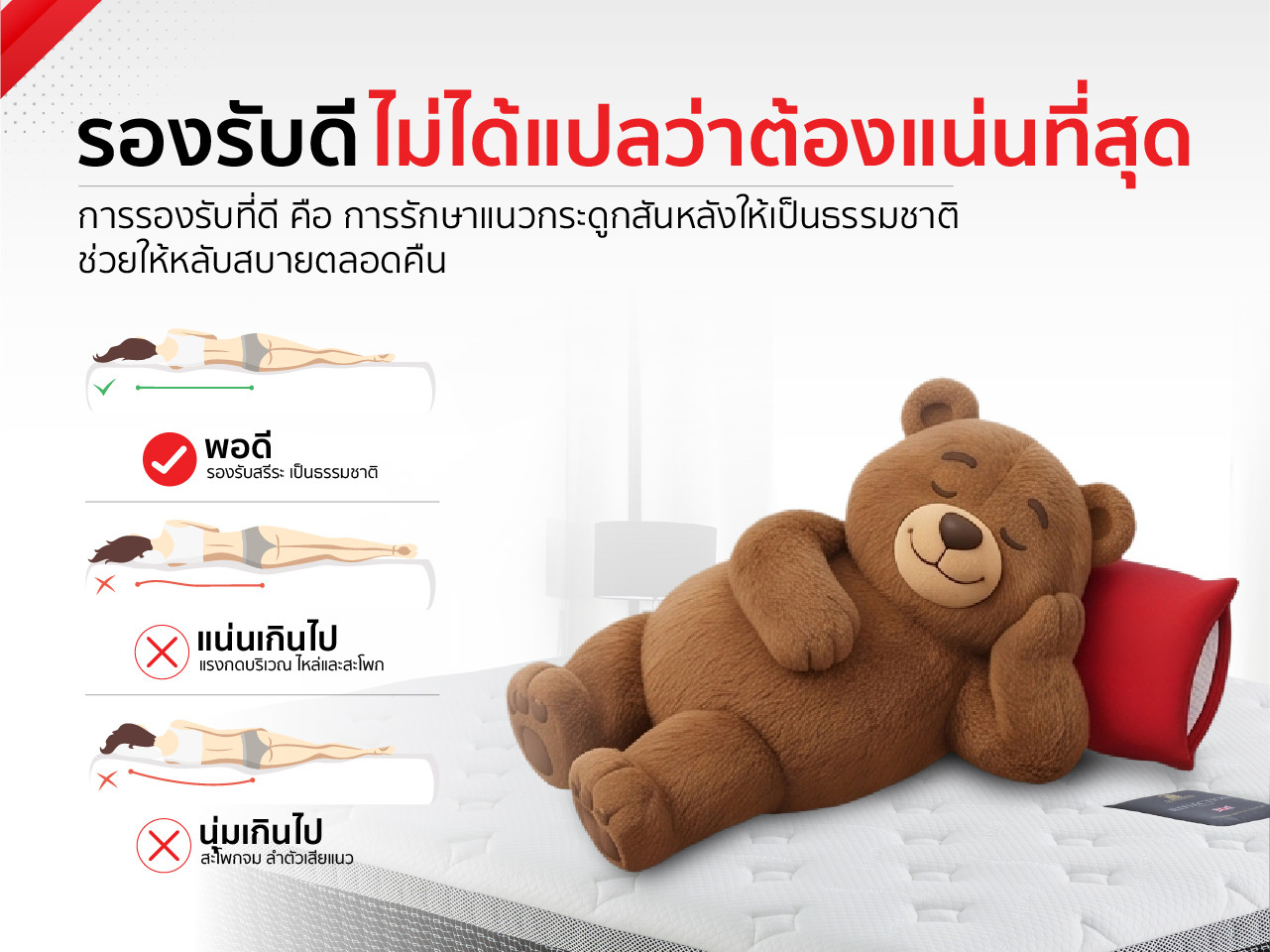
Heavier sleepers should choose a mattress with a strong support system, enough firmness to support the body without excessive sinking, resilient comfort materials, and a thickness suited to their body weight and sleeping position. However, the firmest mattress is not always the best choice. A mattress that feels too firm may create uncomfortable pressure around the shoulders, hips, and back, particularly for side sleepers.
The most suitable choice depends on several factors together: body weight, sleeping position, body shape, comfort preference, and how the mattress feels when tested in the position used at home.
Why Does Body Weight Affect Mattress Choice?
More body weight compresses the comfort layers and support system more deeply. If a mattress is too soft or its core does not provide adequate support, the hips and midsection may sink farther than the rest of the body. This can make changing positions more difficult and may cause discomfort or morning stiffness.
On the other hand, a mattress that is excessively firm may not adapt well to the body's natural curves and may increase pressure around the shoulders or hips. The goal is to find the right balance between:
- Support: How well the internal structure supports the body and maintains a comfortable, natural alignment.
- Comfort: How well the surface cushions the body, distributes pressure, and feels during sleep.
Good support does not mean the mattress must feel extremely firm. Two people with similar body weights may still need different firmness levels.
6 Factors Heavier Sleepers Should Consider Before Buying a Mattress
1. Choose a Firmness That Supports the Body Without Excessive Sinking
Heavier sleepers usually compress a mattress more deeply and may perceive the same model as softer than a lighter sleeper would. A practical starting point is to test mattresses ranging from medium-firm to firm, then observe whether the hips and waist sink too deeply.
Do not judge a mattress only by pressing it with your hand or sitting on its edge. Weight is distributed differently when you lie down, so always test the mattress with your whole body in your usual sleeping position.
Signs that a mattress may be too soft:
- The hips or midsection sink noticeably.
- Turning over or getting out of bed feels difficult.
- The torso feels curved or poorly aligned.
- When lying on your back, your waist feels pulled downward.
- When lying on your stomach, the hips sink and the lower back arches.
Signs that a mattress may be too firm:
- The shoulders or hips feel uncomfortably compressed.
- Your arm feels sore or numb when you lie on your side.
- There is too much space beneath the waist.
- The surface does not accommodate the body's natural curves.
2. Look at the Internal Support System, Not Only the Softness on Top
A mattress for a heavier sleeper should have a stable internal structure that distributes weight and reduces concentrated compression. The support system may use springs, high-density foam, latex, or a combination of materials.
Latex can serve either as the main support core or as an upper comfort layer that adds resilience and helps distribute pressure. Check where the latex sits within the construction, how thick it is, and which other materials it works with. The phrase “latex mattress” alone does not describe the complete support system.
|
Support-system |
Key benefit |
Consider |
|
Pocket Spring |
Each spring responds independently, adapting to the body while reducing motion transfer between partners. |
Spring quality, count, arrangement, and zoning should all be assessed. |
|
Bonnell Spring |
Interconnected springs generally create a stable, supportive feel. |
Motion may travel across the mattress more than with pocket springs. |
|
Latex |
Resilient, responsive, and effective at distributing weight; it can also make turning easier. |
Check whether the mattress uses a full latex core or only a latex comfort layer, as well as the latex thickness and proportion. |
|
High-Density Foam |
Provides continuous support without spring noise. |
Evaluate foam density, quality, and resilience not thickness alone. |
|
Hybrid |
Combines springs with latex, foam, or other comfort materials to balance support and pressure distribution. |
Review the complete layer construction and test for excessive sinking or heat retention. |
No single system is best for everyone. Consider the entire construction—from the cover and pressure-relief layers to the main support core—then check the manufacturer's recommended weight capacity and test the mattress in person.
3. Choose an Appropriate Mattress Thickness
A mattress that is too thin may allow a heavier sleeper to compress through the comfort layers and feel the firmer core underneath, especially when side sleeping or after extended use.
A thickness of approximately 10 - 14 inches can be a useful starting point, but it is not a fixed rule. A thicker mattress does not automatically provide better support.
Check these factors together:
- Thickness of the comfort layers
- Density and quality of the materials
- Spring system or support core
- Manufacturer's recommended weight capacity
- Type and condition of the bed base
4. Choose Responsive Materials That Do Not Allow Excessive Sinking
The upper layers affect softness, pressure distribution, ease of movement, and heat retention.
Latex and highly resilient foam tend to respond and recover quickly, making them suitable for sleepers who dislike a deep-sinking sensation or want to change positions more easily. Memory foam conforms closely and distributes pressure, but its firmness and thickness should suit the sleeper so that it does not feel excessively deep or warm.
If you tend to sleep hot, also consider:
- Whether the cover is breathable
- Whether the internal structure promotes airflow
- How much heat the comfort layers retain
- Whether the bedroom and bedding allow heat and moisture to dissipate
5. Pay Attention to Edge Support
Heavier sleepers should check the strength of the mattress edge because this area experiences concentrated pressure when sitting down, standing up, or changing positions.
A reinforced edge or edge-support system can help:
- Make sitting near the edge feel more stable
- Make getting out of bed easier
- Allow more of the mattress surface to be used
- Reduce the sensation of rolling or sloping near the edge
This is particularly important for older adults and people with knee problems or reduced mobility.
6. Check the Bed Base and Warranty
Even a suitable mattress may sag or lose its shape sooner if it is placed on a damaged or flexible base, or on slats with gaps that are too wide.
Before buying, ask:
- What approximate weight can this model support?
- Is the stated capacity per person or for the combined weight?
- What type of bed base should be used?
- Does a 5 or 6 foot bed require a centre support beam?
- What type and depth of indentation are covered by the warranty?
- Does the mattress need to be rotated from head to foot?
- How long is the warranty, and which components does it cover?
How Firm Should a Mattress Be for a Heavier Sleeper?
There is no single firmness level that suits every heavier sleeper. Use the following as a starting point for testing:
|
Sleeping position |
Starting point |
Why |
|
Back sleeping |
Medium-firm to firm |
Supports the hips and waist without allowing the torso to sink excessively. |
|
Side sleeping |
Medium to firm, with a pressure-relieving comfort layer |
Allows the shoulders and hips to sink slightly while keeping the torso supported. |
|
Stomach sleeping |
Firm |
May reduce excessive hip sinking and lower-back arching. |
|
Combination sleeping |
Medium-firm with a responsive surface |
Makes changing positions easier. |
|
Sleeping with a partner |
An independently responsive support system |
Can reduce motion transfer and accommodate differences in body weight. |
These are only starting points. Firmness and Comfort Level scales are not standardised across brands, so test each mattress rather than comparing numbers alone.
Is Body Weight Alone Enough to Choose a Mattress?
No. Two people with the same weight may have different body shapes and sleeping habits. One person's weight may be distributed evenly, while another carries more weight around the hips and torso, creating a different pressure pattern on the mattress.
Consider these five factors together:
- Individual and combined body weight
- Height and body proportions
- Primary sleeping position
- Areas of recurring pressure or discomfort
- Personal preferences for softness, firmness, and sleeping temperature
How to Test a Mattress for a Heavier Sleeper
Testing a mattress for only one or two minutes may not be enough. Try each model for approximately 10–15 minutes using these steps.
Step 1: Lie in Your Usual Sleeping Position
If you normally sleep on your side, test the mattress on your side rather than only lying on your back. Use a pillow with a height similar to the one you normally use.
Step 2: Check Body Alignment
Ask a companion or a staff member to observe whether your head, shoulders, back, hips, and legs appear naturally aligned in your usual sleeping position.
Step 3: Notice Pressure Points
Remain still for a few minutes and notice whether pressure, soreness, numbness, or discomfort develops around the shoulders, hips, or back.
Step 4: Turn Over and Get Out of Bed
Turn from side to side, sit up, and stand. If you have to push yourself up with significant effort, the comfort layers may be too deep or slow to recover for you.
Step 5: Test the Edge
Sit and lie near the edge to see whether it compresses excessively, especially if you use the edge for support when standing up.
Step 6: Compare at Least Three Firmness Levels
Do not test only the model you expect to prefer. Compare a medium-soft, medium-firm, and firmer mattress to understand how each one feels.
Common Mistakes When Choosing a Mattress for a Heavier Sleeper
-
Choosing the Firmest Mattress Automatically
A very firm mattress is not always more supportive. If it is too firm, it may create uncomfortable pressure around the shoulders and hips, particularly for side sleepers.
-
Looking Only at Mattress Thickness
A thick mattress may contain several soft comfort layers without having a stronger support core. Examine the internal structure and materials as well.
-
Testing Only by Sitting or Pressing With a Hand
Sitting on the edge concentrates weight in one area and does not replicate the way weight is distributed while lying down.
-
Not Sharing the Combined Weight When Buying for Two People
If two people will use the mattress, provide the body weight and sleeping position of both sleepers because the mattress must accommodate their combined weight and potentially different needs.
-
Using an Unsuitable Bed Base
A flexible base or one without adequate centre support may make the mattress feel unstable and increase the likelihood of deformation.
4 Recommended Mattresses for Heavier Sleepers at Mattress City
1. Dunlopillo Millbay

Dunlopillo Millbay Latex Mattress
Key features
- Firma Flex Core provides a stable base and helps distribute body weight.
- Two layers of Talasilver Latex add resilience, recover quickly, and make changing positions easier.
- The 14.5-inch construction provides multiple levels of support and pressure distribution.
- Two Snow Gel Visco Tech Topper layers help distribute pressure and absorb heat.
- Three Body Massage Topper layers provide cushioning without an excessively rigid feel.
- Aerotec® and the open-cell latex structure promote airflow.
- Comfort Level 5 provides a medium-firm feel.
- 10-year warranty.
2. Omazz Flospure
Key features
- Organique Foam Ergo System Base Core provides zoned body support.
- The grooved base surface adjusts support according to pressure in different areas.
- Two Talatech™ Latex Topper layers add resilience and distribute weight.
- Organique Foam Topper adds cushioning and balances pressure.
- 13-inch construction.
- Cotton Velour cover feels soft and breathable.
- Comfort Level 4 provides a soft, comfortable feel.
- 10-year warranty.
3. Dunlopillo Reflection
Key features
- Freedom Coil 6000® Series uses individually responsive pocket springs.
- The independent spring system helps reduce motion transfer when a partner changes position.
- Talasilver Latex Topper adds resilience and distributes weight across the surface.
- FR Latex beneath the support system improves responsiveness and balances support.
- Two Body Care Topper layers distribute pressure and use a microporous structure to promote airflow.
- Soft Edge System reinforces the perimeter with high-density foam.
- SNOWTEMP Fabric and Aerotec® help manage heat and moisture.
- 11.5-inch thickness.
- Comfort Level 5 provides a balanced feel.
- 10-year warranty.
4. Omazz Frental
Key features
- Organique Foam Ergo System Base Core provides zoned body support.
- Two Organique Foam Topper layers help balance weight and distribute pressure.
- LatexLux adds resilience and helps the materials recover their shape.
- Three Royal Cloud Topper layers create a soft, body-conforming feel.
- Cool Gel Infused Foam helps manage heat at the mattress surface.
- Open-cell materials promote airflow.
- 14-inch thickness.
- Comfort Level 1 provides an especially soft feel.
- 10-year warranty.
FAQ
Q: What type of mattress should a person weighing 100 kg choose?
A: Start by testing a medium-firm to firm mattress with a stable support system, responsive materials, and strong edge support. Sleeping position and body proportions also matter. A 100 kg side sleeper may need more pressure relief than a back or stomach sleeper of the same weight.
Q: Do heavier sleepers always need a firm mattress?
A: No. The mattress should support the body without allowing excessive sinking and should also cushion pressure points. The right firmness depends on sleeping position, body proportions, and personal preference.
Q: Is a spring or latex mattress better for a heavier sleeper?
A: Either can be suitable when the construction and material quality are appropriate. Spring mattresses can offer stable support and airflow, while latex is resilient and responsive. A hybrid that combines springs with latex or foam is another option. Test the complete mattress construction before buying.
Q: How thick should a mattress for a heavier sleeper be?
A: Approximately 10–14 inches can be a useful starting range, but thickness alone does not determine support. Also consider material density, the support system, the manufacturer's recommended weight capacity, and the bed base.
Q: Should heavier sleepers use a mattress topper?
A: A topper can change the surface feel or add pressure relief, but it cannot repair a sagging mattress or compensate for an inadequate support core. If the existing mattress has permanent indentations or allows the body to fall out of alignment, replacing the mattress may be more appropriate than covering it with a topper.
Q: When should a mattress used by a heavier sleeper be replaced?
A: Inspect the mattress if it develops permanent indentations, allows noticeably deeper sinking, makes movement more difficult, produces unusual noises, or feels less comfortable than before. Actual service life depends on the materials, body weight, care, and bed base—not only on the number of years used.
Summary: How Should Heavier Sleepers Choose a Mattress?
Heavier sleepers should consider the support system, firmness, material quality, thickness, edge support, and bed base together. The firmest model is not automatically the best. The right mattress should support the hips and torso without creating excessive pressure around the shoulders or the body's natural curves.
People with the same body weight may still need different mattresses. The most reliable approach is to test each mattress in your usual sleeping position, compare several firmness levels, and ask a trained advisor to help observe your body alignment.
Visit any Mattress City branch to test mattresses suited to your body shape, sleeping position, and comfort preference, with complimentary guidance from a Sleep Coach.
Find a Mattress City branch near you:
https://mattresscity.co.th/th/store-locator
Note: This article provides general information to support mattress selection. It is not medical advice or a medical diagnosis. If you experience persistent pain, numbness, muscle weakness, or other ongoing symptoms, consult a physician or qualified healthcare professional.