


 BEST BRAND
 BEST SELLER
 FIND STORE NEARBY
 WARRANTY REGISTRATION
- REM Sleep is the sleep stage where the brain is highly active and dreams happen the most
- It affects memory, learning, and mood
- It should make up about 20–25% of total sleep time
- Not sleeping deeply = not enough REM = waking up feeling unrefreshed
- Adjusting your habits and choosing the right mattress can improve REM Sleep quality
Ever slept a full 7–8 hours and still woken up feeling tired? One reason many people don't know about: "you may have slept long enough, but didn't get deep enough sleep during REM Sleep."
REM Sleep is the sleep stage that affects your brain, memory, mood, and overall quality of life. Without this stage, no matter how long you sleep, you'll still feel like you didn't really rest.
This article will walk you through what REM Sleep is, how important it is, and how to improve your sleep quality so you sleep more deeply every night.
What Is REM Sleep?
REM Sleep is the stage of sleep where the eyes move rapidly (Rapid Eye Movement). The brain is nearly as active as when you're awake, but the muscles throughout the body are in a state of temporary paralysis. This is the stage where dreams are the most vivid and the brain stores memories.
In medical terms, REM Sleep is also called Paradoxical Sleep because it's a contradiction — the brain is awake, but the body doesn't move. This temporary paralysis stops us from physically acting out our dreams.
Normally, the sleep cycle alternates between REM and Non-REM Sleep all night long, and REM happens more often as morning approaches.
What Happens in the Body During REM Sleep?
During REM Sleep, important changes happen in the body and brain, such as:
- The brain becomes highly active (close to when you're awake)
- Vivid dreams happen, and the body goes into "temporary stillness" (Muscle paralysis)
- Heart rate speeds up, and breathing becomes uneven
- The brain stores memories and processes information
- The eyes move quickly under tightly closed eyelids
- Skeletal muscles become temporarily paralyzed (Muscle Atonia) to prevent you from moving along with your dreams
- Body temperature goes up and down without staying steady
You could say it's the stage where "the brain is resetting itself."
What Is Non-REM Sleep? A Detailed Breakdown of the Stages
Non-REM Sleep (NREM) is the sleep stage where the body goes into deep rest, focused on body repair — different from REM Sleep, which focuses on brain repair. It's divided into 3 stages: N1, N2, and N3.
Stage N1: Light Sleep
- Lasts about 1–5 minutes — the transition from being awake to falling asleep
- Makes up 2–5% of total sleep time
- You may experience a sudden twitch (hypnic jerk) or jolt
Stage N2: Core Sleep
- The longest stage, around 45–55% of sleep time
- Body temperature drops, heart rate slows down
- This is the stage where the brain starts doing its early memory work
Stage N3: Deep Sleep / Slow-Wave Sleep
- Around 13–23% of sleep time
- Brain waves become very slow (Delta waves)
- The body repairs cells, builds up the immune system, and releases growth hormone
- If you're woken up during this stage, you'll feel very groggy
During this stage, the body restores itself — for example, repairing muscles and building up the immune system.
How Are REM Sleep and NREM Sleep Different?
Here's a comparison table to make it clearer:
|
REM Sleep |
NREM Sleep |
|
|---|---|---|
|
Brain activity |
High |
Lower |
|
Dreams |
Frequent and vivid |
Few |
|
Body recovery |
Focus on the brain |
Focus on the body |
|
Movement |
Muscles stay still |
Can move |
|
When in the night |
More in the early morning |
More in the early night |
|
Share (adults) |
20–25% |
75–80% |
Both stages of sleep are important, and they need to be in "balance."
How Much REM Sleep Should You Get? Broken Down by Age
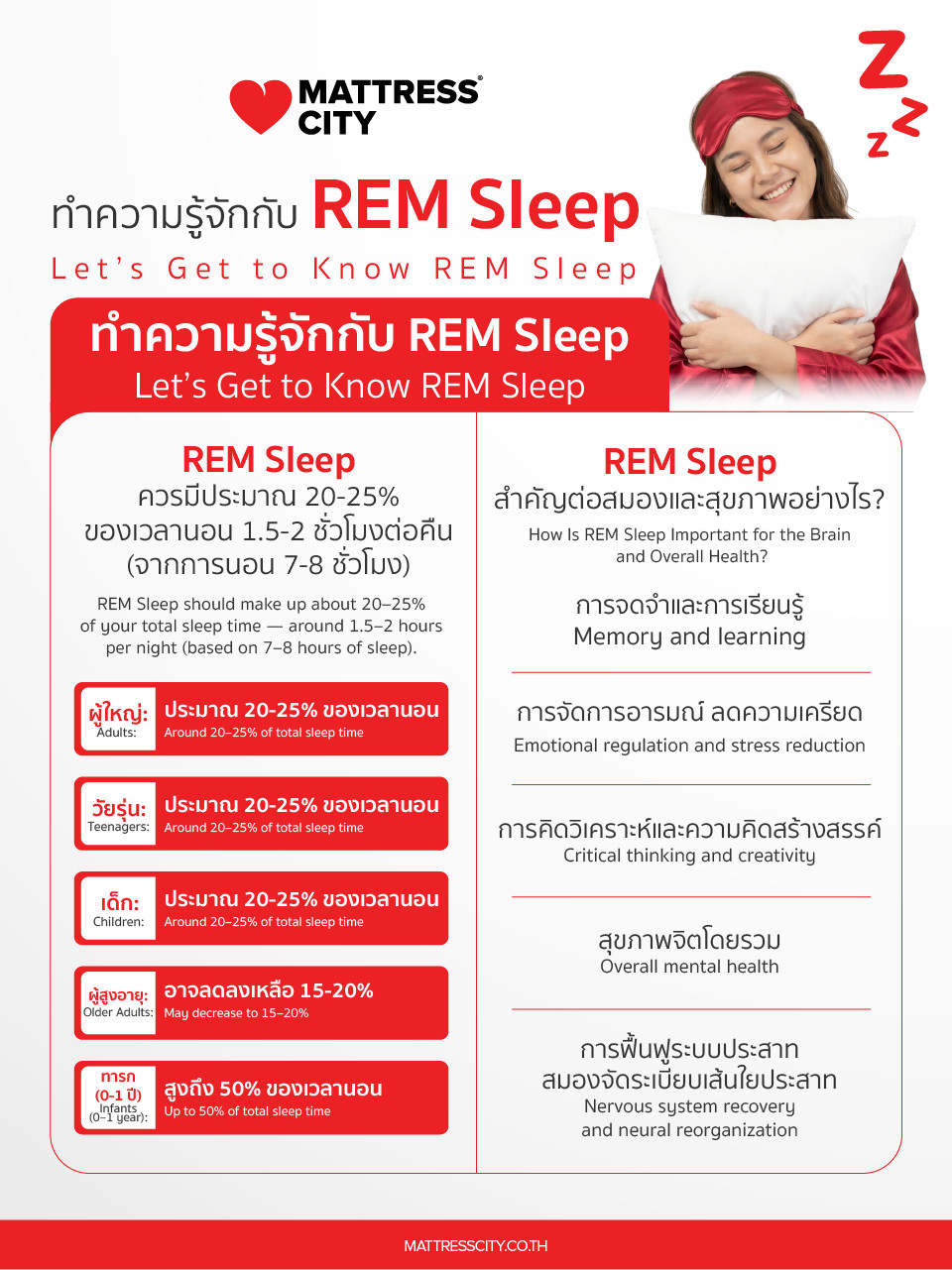
How much REM Sleep you need depends on age. The average adult should have REM Sleep for about 20–25% of their sleep time, or 1.5–2 hours per night (based on 7–8 hours of sleep). Children and infants need much more REM Sleep than this.
- Adults: about 20–25% of sleep time
- Teens: about 20–25%
- Children: up to 30–50%
- Older adults: may drop to 15–20%
- Infants (0–1 year): up to 50% of sleep time, because the brain is in a phase of intense development
Example: If you sleep 8 hours, you should have about 1.5–2 hours of REM Sleep.
If you use a smart watch (such as Garmin, Apple Watch, or Fitbit) and your REM reading is below 15% on a regular basis, you should consider adjusting your sleep habits or seeing a doctor.
How Does REM Sleep Matter for the Brain and Health?
REM Sleep Isn't Just for "Dreaming" — It Also Matters For
- Remembering things and learning
- Handling emotions and reducing stress
- Analytical thinking and creativity
- Overall mental health
- Nervous system recovery — the brain reorganizes its nerve connections
If REM Isn't Enough, It Can Lead To
- Worse memory
- Getting easily annoyed
- Mental fatigue, slower thinking
- Lower immunity when REM is short for a long stretch of time
7 Ways to Boost REM Sleep and Sleep More Deeply
Try these simple habit changes:
1. Stick to a Sleep Routine
Going to bed and waking up at the same time every day — including weekends — helps keep your biological clock (Circadian Rhythm) steady, which lets you enter REM more consistently.
2. Avoid Screens 1 Hour Before Bed
Blue light from your smartphone, tablet, or TV blocks the release of Melatonin, making it harder to fall asleep and affecting your REM cycle.
3. Cut Down on Caffeine and Alcohol
- Caffeine: avoid it within 6 hours of bedtime
- Alcohol: while it makes you fall asleep faster, it directly reduces REM Sleep, especially in the first half of the night
4. Exercise Regularly
30 minutes a day of moderate exercise helps boost Deep Sleep and REM, but you shouldn't exercise close to bedtime (within 2 hours).
5. Set Up Your Bedroom Environment
- Room temperature: 22–25°C (important in Thailand's hot, humid climate)
- Light: completely dark — use blackout curtains or an eye mask
- Sound: quiet, or use white noise
6. Practice Relaxation Before Bed
Deep breathing, 10 minutes of meditation, or reading lowers Cortisol, which blocks REM.
7. Choose a Mattress That Supports Your Body and Doesn't Wake You Up at Night
This is the factor many people overlook. Waking up often during the night cuts the REM cycle immediately. A good mattress needs to support the spine, relieve pressure, breathe well, and not sag.
RBD (REM Sleep Behavior Disorder): When REM Goes Wrong
RBD, or REM Sleep Behavior Disorder, is a condition where the temporary paralysis during REM Sleep stops working properly, causing the person to physically act out their dreams — for example, kicking, shouting, getting up and walking, or fighting.
How RBD Is Different From:
- Sleep Paralysis: you're awake but can't move — the paralysis stays active at the wrong time
- Sleepwalking: happens during Deep Sleep (NREM), not REM
Warning Signs of RBD:
- Intense dreams with clear physical movements that follow them
- A bed partner sees kicking, punching, or shouting
- Injuries from moving while asleep
- Most often found in men aged 50 and over, and may be an early sign of Parkinson's disease
If you suspect this, you should see a Sleep Specialist for a Sleep Study (Polysomnography).
What Destroys REM Sleep: Habits You Should Avoid
- Built-up stress
- Using your phone before bed
- Routinely staying up late
- An uncomfortable or sagging mattress
- Noise
- Room temperature that isn't right
- Taking certain medications — for example, some SSRI antidepressants reduce REM
All of these break the sleep cycle and directly reduce REM Sleep.
What Happens If You Don't Get Enough Sleep?
- Long-term tiredness
- Lower focus
- Low immunity
- Higher risk of heart disease and diabetes
- Mood swings / getting easily stressed
- High blood pressure
- Higher risk of depression and anxiety
- Speeds up long-term brain decline
*Information from the Cleveland Clinic says that consistently sleeping less than 6 hours significantly raises the risk of type 2 diabetes, high blood pressure, stroke, and depression.*
Your Mattress: The Important Factor Many People Overlook
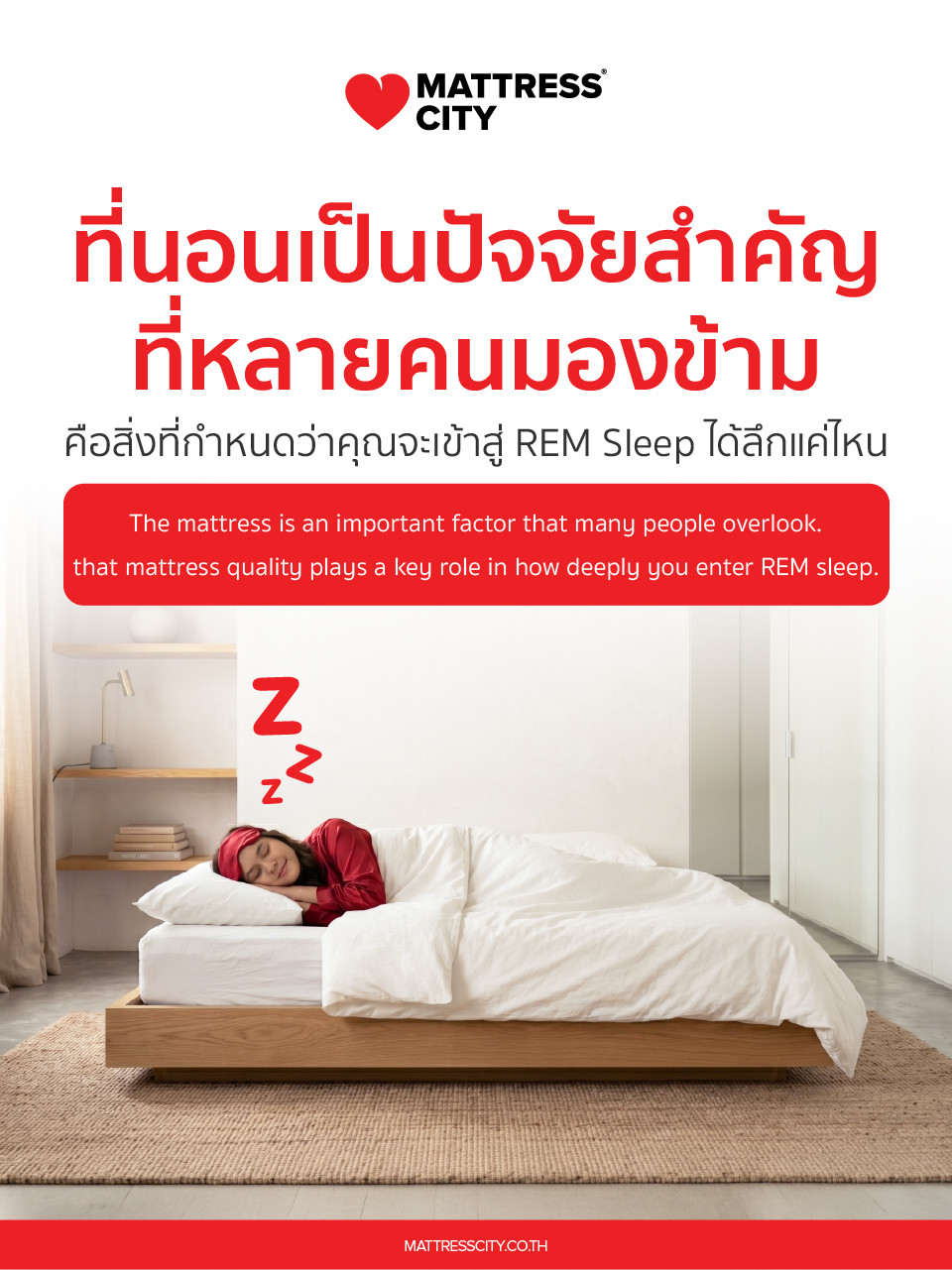
Many people focus only on how many hours they sleep, but they forget that the quality of the mattress is what decides how deeply you'll enter REM Sleep.
A Good Mattress Should:
- Properly support the alignment of your spine
- Relieve pressure (Pressure Relief)
- Not sag to the point you have to keep turning over
- Breathe well, not feel hot
Because waking up in the middle of the night, again and again, cuts the REM Sleep cycle right away.
FAQ: Common Questions About REM Sleep
Q: Is REM Sleep more important than Deep Sleep?
A: Both are important on different sides. Deep Sleep restores the body, while REM restores the brain.
Q: Why do I dream so much close to morning?
A: Because REM periods get longer toward the end of sleep.
Q: Does drinking alcohol really help you sleep better?
A: It may help you fall asleep faster, but it reduces the quality of REM Sleep.
Q: Does waking up at night affect REM?
A: Yes, directly, because it breaks the sleep cycle.
Q: How accurate are smart watches at measuring REM Sleep?
A: Smart watches like Garmin, Apple Watch, and Fitbit use heart rate variability and motion sensors to estimate REM — accurate at the trend level, but not as detailed as a Sleep Study (Polysomnography). They work well as a personal guideline.
Q: What kind of mattress can help boost REM Sleep?
A: A mattress with good airflow, that supports your body, and doesn't make you wake up at night — for example, a Pocket Spring with Latex, or a Memory Foam with a cooling system. Recommended models: LOTUS Arctic Zen or Dunlopillo Miracle.
Summary
REM Sleep is at the heart of good sleep — it's not about clocking enough hours, but about deep, quality sleep.
Small habit changes, together with choosing the right mattress, can help you enter REM Sleep better, sleep more soundly, and wake up feeling more refreshed.
If you want to take your sleep quality to the next level, start by choosing the mattress that fits you. Choose Mattress City to turn every night into truly deep, quality rest.
Interested in Mattresses and Bedding from Mattress City?
Browse our Mattresses collection
Browse our Bed Linen collection
Browse our Toppers collection
Or contact our sales team for more information at
Phone: 062-246-2494 or 1497
Line Official ID: @mattresscity