


 BEST BRAND
 BEST SELLER
 FIND STORE NEARBY
 WARRANTY REGISTRATION
Most people never stop to think about how much their sleeping position affects their health each night. Yet neck pain, back pain, acid reflux, and restless sleep can all be traced back, at least in part, to the way you position your body while you sleep.
Sometimes these issues aren't just the result of a hard day's work. They come from spending years sleeping in the wrong position.
Correcting your sleeping position can help decompress the spine, ease aches and soreness, and allow your body to recover far more effectively each night.
- Side sleeping is generally considered the healthiest sleeping position
- Sleeping on your back helps reduce pressure on the spine
- Sleeping on your stomach can lead to neck and back pain
- The right mattress and pillow help keep the spine properly aligned during sleep
What Is the Correct Sleeping Position and Why Does It Matter?
The correct sleeping position is one that keeps the spine in its natural alignment, where muscles aren't strained or twisted out of shape. A good position reduces pressure on the neck, back, and hips. Sleep in the wrong position long enough and the consequences can include chronic back pain, neck pain, numbness in the arms or legs, acid reflux, and disrupted sleep.
Choosing the right sleep position is one of the most important, and most overlooked, factors in sleep quality.
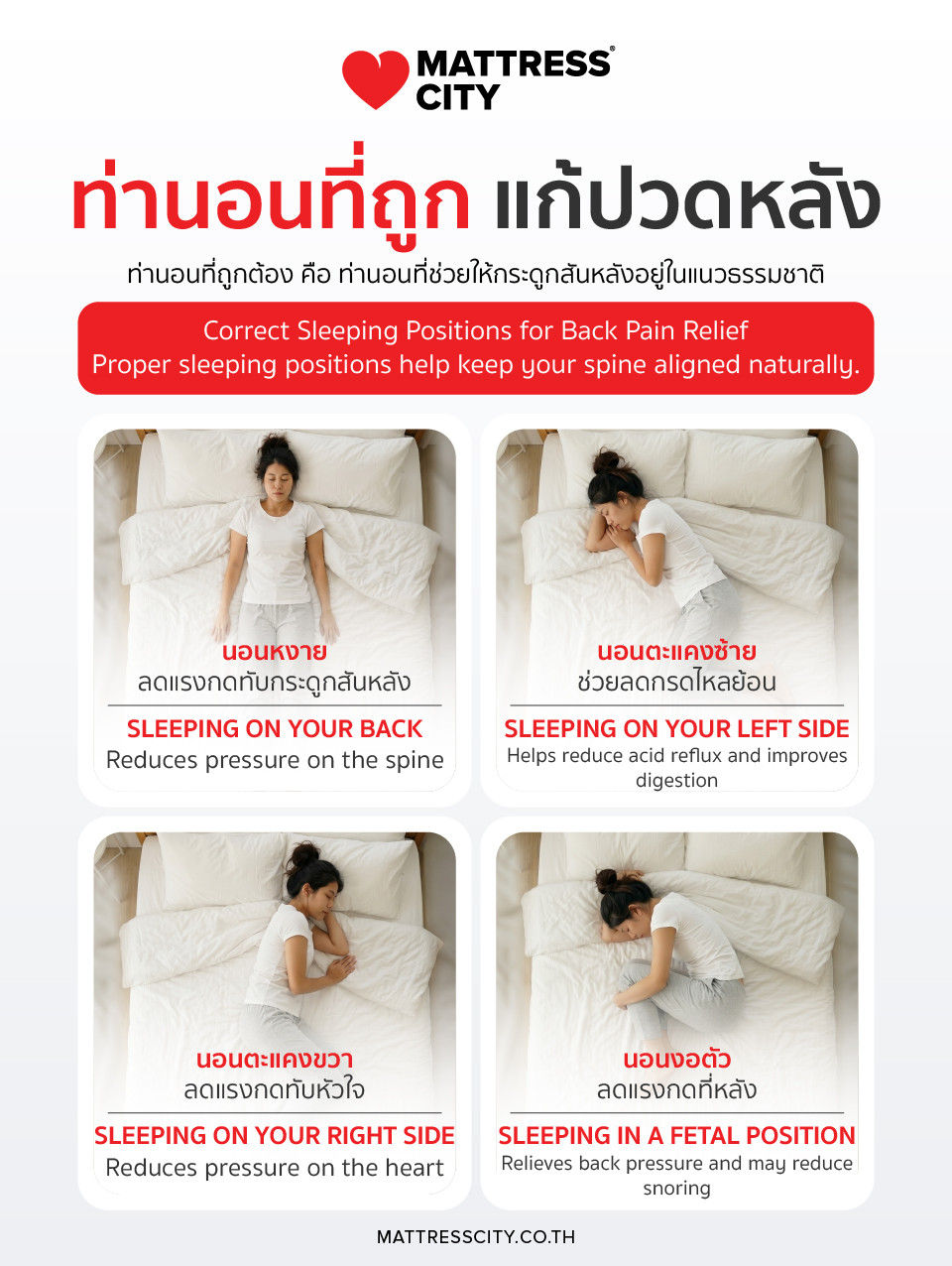
Pros and Cons of Each Sleeping Position
1. Sleeping on Your Back
Back sleeping keeps the spine in its most naturally straight position.
Advantages
- Reduces pressure on the spine
- Eases neck and back pain
- Well-suited for people with back problems
Disadvantages
- Can increase snoring
- Not recommended for people with sleep apnea
2. Sleeping on Your Side (Left vs Right)
Side sleeping is the position most widely recommended by doctors and sleep specialists.
Left side, Advantages
- Helps reduce acid reflux
- Supports better digestion
- Ideal for pregnant women
Right side, Advantages
- Reduces pressure on the heart
- More comfortable for some people
Overall, side sleeping promotes easier breathing and can significantly reduce snoring.
3. Sleeping on Your Stomach
Stomach sleeping is fairly common, but it's generally not great for your health.
Disadvantages
- Keeps the neck twisted to one side all night
- Increases pressure on the spine
- Can cause neck and back pain
If stomach sleeping is unavoidable, use a thin, low pillow to help minimise pressure on the neck.
4. The Fetal Position
The fetal position mimics the posture of a baby in the womb, curled on your side with knees drawn up.
Advantages
- Reduces pressure on the lower back
- Can be helpful for certain types of back pain
- May reduce snoring
Watch out: curling too tightly can cause the back to round and lead to aching, keep the position relatively relaxed.
The Correct Sleeping Position for Different Groups
Pregnant Women
Specialists recommend sleeping on the left side, as it promotes better blood flow to the baby and reduces pressure on the uterus. Placing a pillow between the knees also helps relieve pressure on the hips.
Older Adults
Older adults should choose positions that minimise pressure on the bones and joints, such as sleeping on the back or on the side, supported by a pillow under the knees. A mattress that provides good body support is particularly important for this group.
People with Back Pain or Neck Pain
The most suitable positions are sleeping on the back with a pillow placed under the knees, or sleeping on the side with a pillow between the knees. Both approaches help maintain the spine's natural curvature and reduce tension in the muscles around it.
Common Bad Sleeping Habits Most People Don't Know About
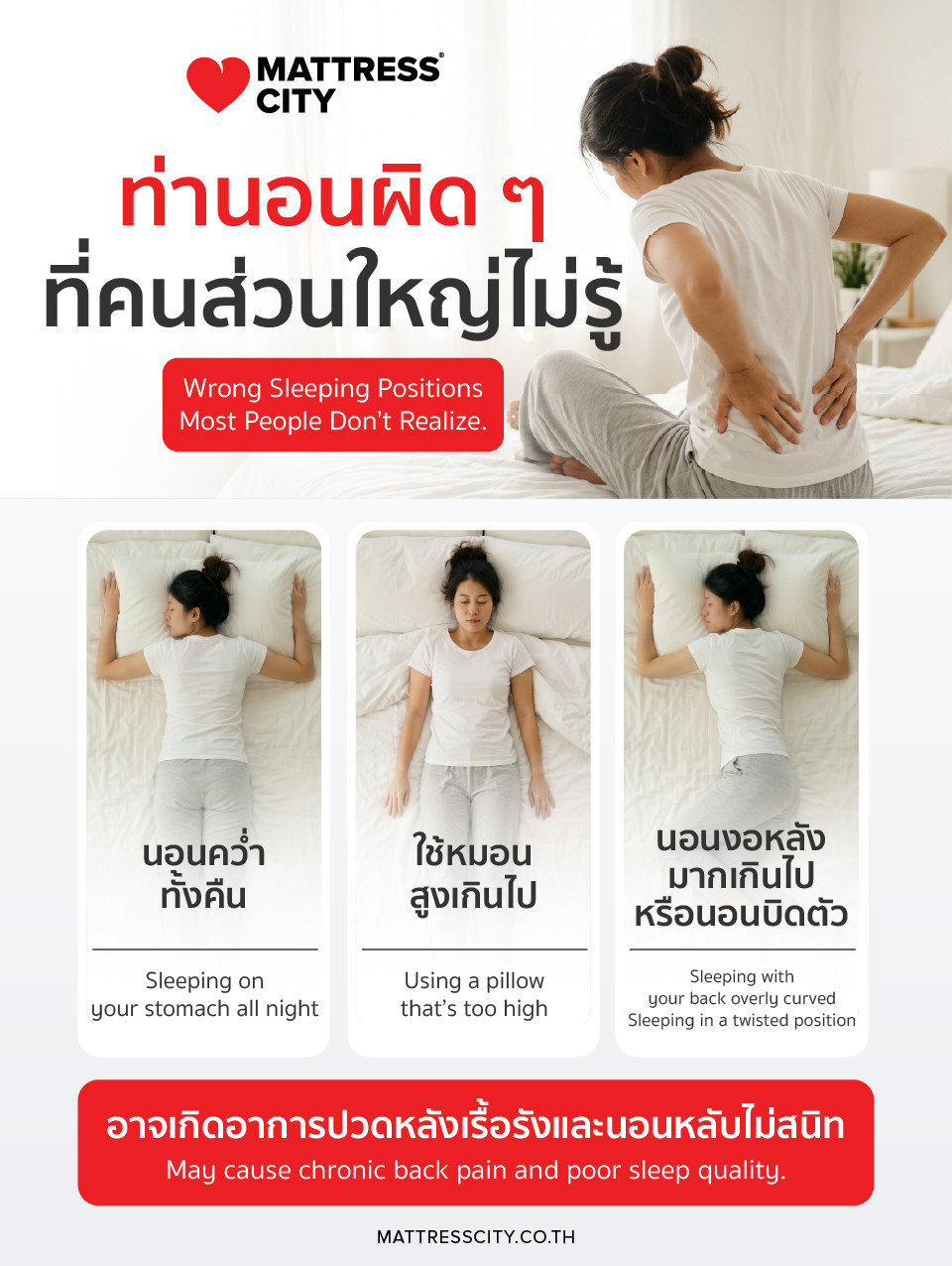
Many people have sleep habits that silently damage their health, such as sleeping on the stomach all night, using a pillow that's too high, curling up too tightly, or twisting the body. Over time, these habits can lead to chronic back pain and poor-quality sleep.
Choosing the Right Mattress and Pillow for Your Sleep Position
Beyond position itself, the mattress and pillow you choose play a major role in sleep quality.
When selecting a mattress, consider spinal support, weight distribution, and material flexibility. For example:
- Side sleepers should choose a mattress that cushions pressure at the shoulder and hip
- Back sleepers do best with a mattress that provides firm, even support along the spine
Ergonomic mattresses from Mattress City are designed to support the body in its correct natural position, reduce aches and soreness, and help you sleep more comfortably through the night. Browse ergonomic mattresses for every sleep position from Mattress City here.
Tips for Better Sleep
If you want to genuinely improve your sleep quality, try building these habits:
- Go to bed and wake up at the same time every day
- Reduce screen time before bed
- Avoid caffeine in the evening
- Set your room to a comfortable temperature
- Choose a mattress that properly supports your body
Small changes like these can make a real difference, helping you sleep deeper and wake up feeling genuinely refreshed.
FAQ: Common Questions
Q: What is the best sleeping position?
A: Generally, sleeping on your side is considered the healthiest position, it reduces snoring and helps keep the spine properly aligned.
Q: Does sleeping on your stomach really cause back pain?
A: Yes, stomach sleeping keeps the neck twisted to one side and increases pressure on the spine, which can lead to neck and back pain over time.
Q: How high should my pillow be?
A: Your pillow should be at a height that keeps your neck in line with your spine, not too high and not too flat.
Q: Does the mattress really affect sleeping position?
A: Absolutely. A good mattress supports the body's natural contours and helps maintain the correct sleeping position, making a significant difference to how you feel in the morning.
Summary
Adjusting to the correct sleeping position is one of the simplest things you can do to reduce health issues and improve sleep quality. Whether it's:
- Choosing a position that works for your body, and using a pillow that properly supports your neck
- Or selecting a mattress that helps keep your spine aligned
All of these things work together to help you sleep deeper, wake up with less pain, and feel more energised every morning.
If you're looking for a mattress that supports your body and helps you sleep in the correct position, explore quality mattresses from Mattress City, and turn every night into a genuine rest.