


 BEST BRAND
 BEST SELLER
 FIND STORE NEARBY
 WARRANTY REGISTRATION
- Snoring is caused by the airway narrowing while you sleep.
- It’s common in people who sleep on their back, are overweight, or have airway problems.
- Snoring can be a sign of sleep apnea, which is dangerous.
- Changing your habits, sleep position, and mattress can all help reduce snoring.
- If you snore unusually loudly, see a doctor for a diagnosis.
Snoring at night might seem like a small thing, but in reality, “snoring” is a health warning many people overlook. It doesn’t just disturb the person next to you - it can also affect your own sleep quality and long-term health.
This article will walk you through what causes snoring, along with ways to fix it that really work, so you can get back to sleeping deeply, quietly, and with better quality.
What Is Snoring?
Snoring is the sound made by the vibration of tissue in the throat when the upper airway narrows during sleep. When air tries to flow through the narrowed passage, it makes soft tissues like the soft palate and uvula vibrate, creating the snoring sound.
What Causes Snoring?
Snoring is caused by the upper airway (nose, throat, soft palate, and uvula) narrowing while you sleep, which makes it hard for air to flow through. The main causes come from 7 factors: being overweight, sleeping on your back, alcohol, nasal congestion, facial structure, increasing age, and smoking.
The main causes of snoring include:
- Excess body weight: fat presses down on the airway.
- Sleeping on your back: the tongue falls backward.
- Drinking alcohol before bed.
- Nasal congestion / allergies.
- Facial structure, such as a short chin or low palate.
- Increasing age: muscles become loose.
- Smoking: airway inflammation.
- Sleeping pills or muscle relaxants, which make the throat muscles relax too much.
- Enlarged tonsils or adenoids, often found in children.
How Do You Know If You Snore?
Many people don’t realize they snore, because it happens while they’re asleep.
Signs you may be snoring, such as:
- The person next to you says you snore loudly.
- You wake up not feeling refreshed.
- Drowsy during the day.
- Dry mouth or sore throat after waking up.
- Waking up suddenly in the middle of the night.
- Headache when you wake up - a sign of low oxygen during the night.
- Use a sleep-recording app like SnoreLab or Sleep Cycle to check yourself.
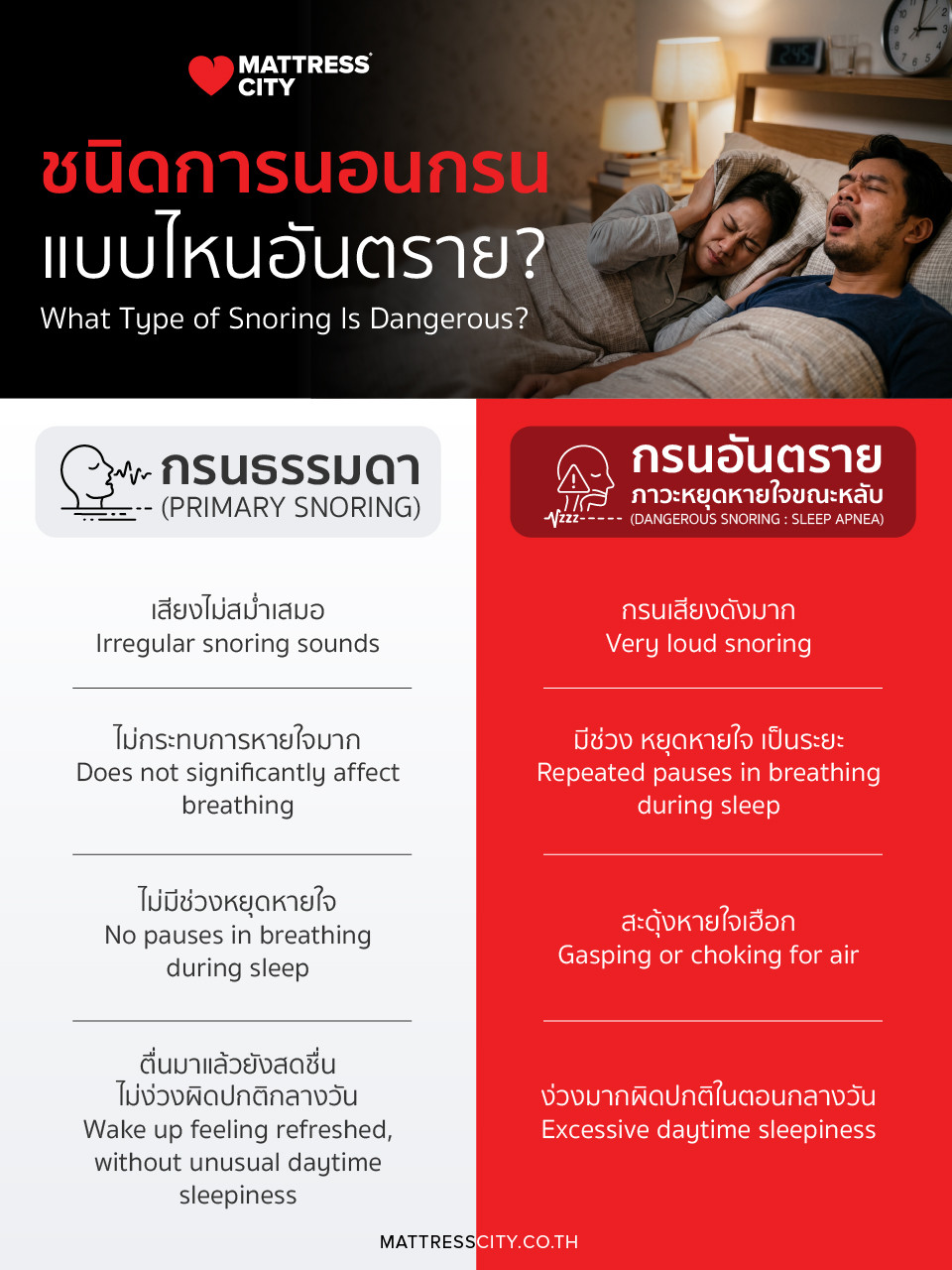
Types of Snoring - Which Kind Is Dangerous?
Snoring comes in both an ordinary type and a type you should watch out for.
Ordinary Snoring (Primary Snoring)
- The sound is irregular.
- Doesn’t affect breathing much.
- No pauses in breathing.
- You wake up still feeling refreshed, with no unusual daytime drowsiness.
Dangerous Snoring: Sleep Apnea in 3 Types
- Very loud snoring.
- Periodic “pauses in breathing.”
- Gasping for breath.
- Unusual heavy drowsiness during the day.
How Does Snoring Affect Your Health?
Snoring isn’t just loud - it also affects your body, for example:
- Sleep that isn’t deep (poor Sleep Quality).
- Chronic fatigue.
- Risk of heart disease and high blood pressure.
- Reduced concentration.
- Poor memory.
- Higher risk of accidents from drowsiness.
- Risk of Stroke from low oxygen happening repeatedly all night.
- Higher risk of type 2 diabetes.
- Reduced sexual performance, from abnormal hormone levels.
10 Ways to Stop Snoring on Your Own
Ways to stop snoring - you can follow these 10 steps at home:
- Change your sleep position (very important). Sleeping on your side helps reduce airway blockage.
- Lose weight. It helps reduce pressure on the neck area.
- Avoid alcohol before bed. It relaxes the muscles too much.
- Quit smoking. It reduces airway inflammation.
- Manage allergies. Use an air purifier or keep your room clean.
- Use a pillow that supports your neck. It helps keep the airway open.
- Sleep on a regular schedule. It helps make your sleep cycle better.
- Raise the head of the bed slightly. It reduces the gravity pressing on the airway.
- Drink enough water. It reduces mucus stickiness.
- Exercise regularly. It helps strengthen the muscles, including the airway muscles.
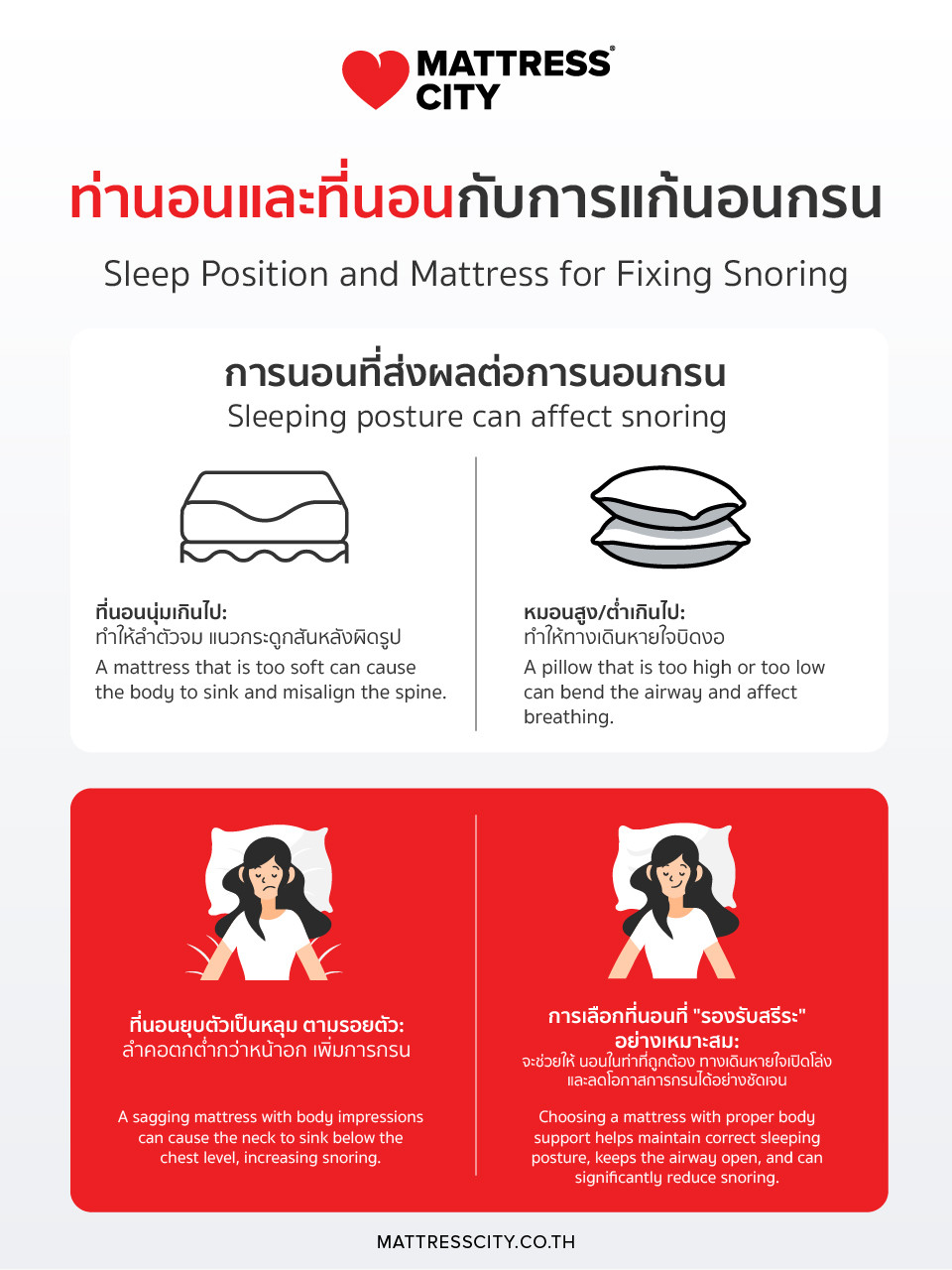
Sleep Position and Mattress for Fixing Snoring
Many people don’t know that the mattress and pillow have a direct effect on snoring.
- A mattress that’s too soft: your body sinks in, and the spine alignment becomes distorted.
- A pillow that’s too high or too low: makes the airway bend.
- A mattress that sags into a body-shaped dip: the neck drops lower than the chest, which makes snoring worse.
Choosing a mattress that properly “supports the body” will help you sleep in the correct position, keep the airway open, and clearly reduce the chance of snoring.
Medical Treatment for Snoring
If symptoms are severe, a doctor may recommend things like:
- A CPAP machine (helps open the airway).
- An oral appliance.
- Surgery to fix the airway structure.
- Allergy or sinus treatment.
- Sleep Test (Polysomnography): the standard test for diagnosing Sleep Apnea, which measures the AHI value.
- BiPAP: a breathing device similar to CPAP but with two pressure levels, used for patients who can’t tolerate CPAP.
FAQ - Common Questions About Snoring
Q: Is snoring dangerous?
A: If it’s the ordinary kind, it may not be dangerous. But if it’s Sleep Apnea, it can put you at risk of serious illness.
Q: Why do I snore some nights and not others?
A: It depends on your sleep position, tiredness, alcohol, and physical condition.
Q: Is it abnormal for a child to snore?
A: If they snore often, get it checked, because it may be related to the adenoids or tonsils.
Q: Can a pillow really help reduce snoring?
A: Yes, as long as you choose a pillow that helps align the head and neck correctly.
Q: Is it abnormal for women to snore?
A: Women snore less than men in general (Sleep Apnea is found in 6.3% of Thai women compared to 15.4% of Thai men), but after menopause the risk increases due to hormonal changes. If new snoring symptoms appear during menopause, you should consult a doctor.
Q: Which kind of mattress best helps reduce snoring?
A: A mattress with firm support that holds the body without sagging - it helps keep the spine and neck aligned and reduces airway blockage. We recommend latex mattresses or firm spring mattresses.
Summary
Snoring isn’t a small thing, and shouldn’t be left without fixing.
Small habit changes - like sleep position, taking care of your health, and choosing the right mattress - can greatly help reduce snoring and improve sleep quality.
If you want to wake up “not drowsy, not tired, and not being told off for being loud,”
start simple by choosing the right mattress.
Choose Mattress City to turn every night quiet, sleep deeply, and wake up feeling fresher than before.
Interested in Mattresses and Bedding from Mattress City?
Browse our Mattresses collection
Browse our Latex Mattress collection
Browse our Spring Mattress collection
Or contact our sales team for more information at
Phone: 062-246-2494 or 1497
Line Official ID: @mattresscity