


 BEST BRAND
 BEST SELLER
 FIND STORE NEARBY
 WARRANTY REGISTRATION
Ever been on the edge of sleep when your whole body suddenly jolts, like you've just fallen off something, and you startle wide awake? A lot of people find themselves wondering: is sleep twitching actually dangerous, or is it just something weird my body does?
This sensation, commonly known as a "sleep start" or "hypnic jerk", is surprisingly common, especially during the transition from wakefulness into sleep. In most cases it's completely harmless, but sometimes it can be linked to the nervous system or certain sleep habits worth looking at.
This article walks you through the causes, what it feels like, and practical things you can do yourself to sleep more peacefully again.
- Sleep Twitching are common and can occur at any age; they are usually harmless.
- The 7 main causes include stress, lack of sleep, caffeine intake, late-night exercise, and mineral deficiencies.
- You should see a doctor if the twitching happens every night, involves seizures or stiffness, or affects your quality of life.
- A supportive mattress and pillow can help relax muscles and reduce leg twitching during sleep.
What Does Sleep Twitching Feel Like?
Sleep twitching (Sleep Start or Hypnic Jerk) is a sudden, involuntary muscle contraction that happens as you're falling asleep.
Common experiences include:
- Feeling like you are falling from a height
- Sudden twitching of the arms or legs
- Abrupt awakening, sometimes accompanied by a rapid heartbeat.
It typically happens once or twice, after which most people drift back to sleep without issue.
7 Common Causes of Sleep Twitching
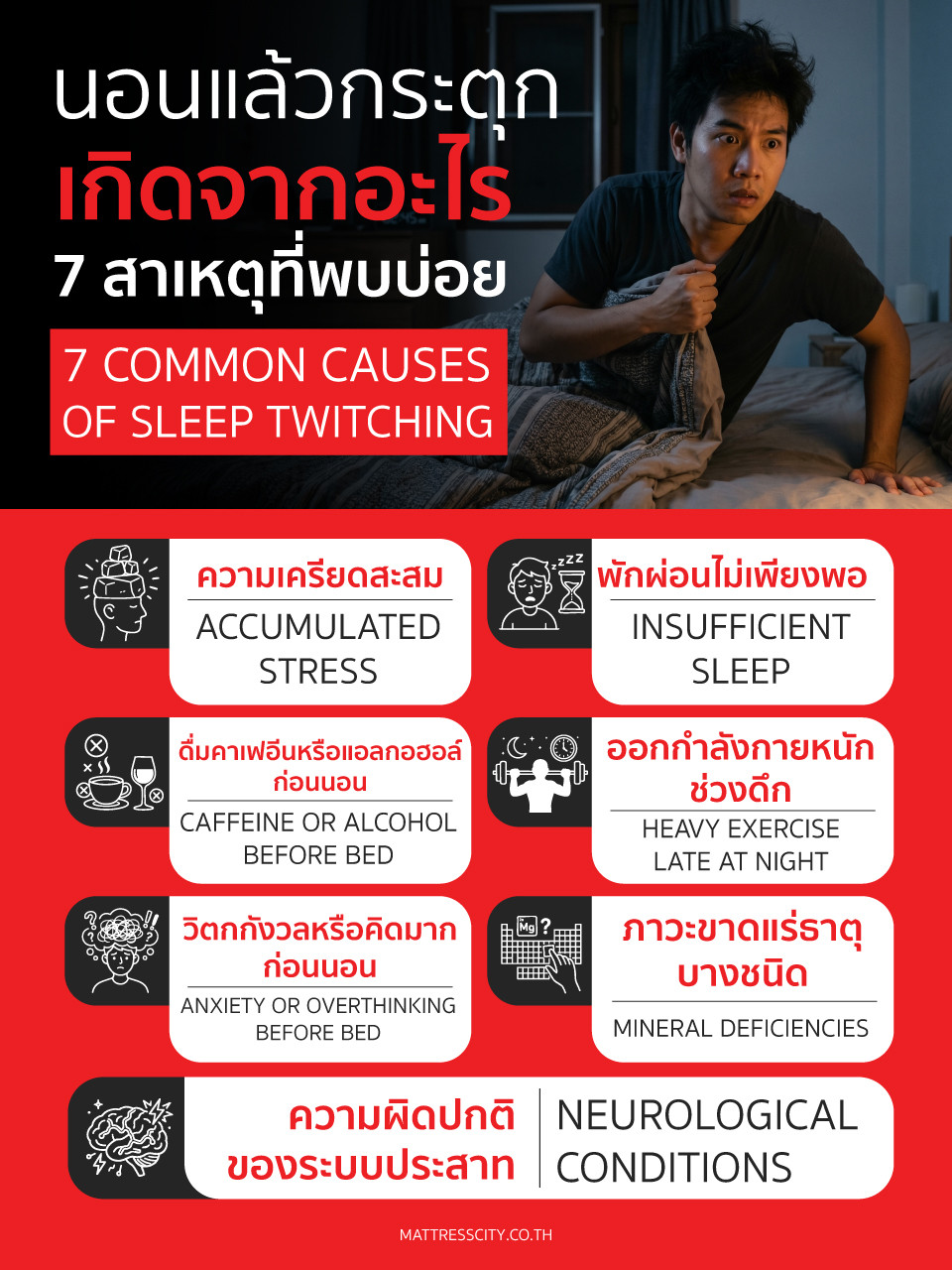
- Accumulated stress, stress keeps the nervous system on high alert. Even when the body wants to rest, the brain keeps running.
- Insufficient sleep, irregular sleep schedules or sleep deprivation disrupts the deep sleep cycle.
- Caffeine or alcohol before bed, coffee, tea, energy drinks, and alcohol all stimulate the nervous system.
- Heavy exercise late at night, the body stays in an activated state long after the workout ends.
- Anxiety or overthinking before bed, the brain keeps working even after you close your eyes.
- Mineral deficiencies, particularly magnesium or potassium.
- Neurological conditions (rare), such as epilepsy or certain sleep disorders.
Is Sleep Twitching Dangerous?
The question everyone asks, is sleep twitching actually dangerous?
In general, no, it's a normal bodily response found in people of all ages. That said, watch out if you notice:
- Twitching every night
- Many twitches in a row
- Seizures, stiff muscles, or fainting
- Severe headache with the twitching
If any of these apply, it's worth seeing a doctor for further evaluation.
How to Prevent Sleep Twitching
- Keep a Consistent Sleep Schedule
Try to go to bed and wake up at the same time every day, even on weekends. When your body gets used to a regular rhythm, the nervous system naturally relaxes more during the wind-down phase, reducing the likelihood of hypnic jerks.
- Avoid Caffeine at Least 6 Hours Before Bed
Caffeinated drinks like coffee, tea, fizzy drinks, and energy drinks stimulate the nervous system and keep the body alert far longer than you might expect. Cutting them off at least 6 hours before bed gives your body time to wind down naturally and slide into sleep more smoothly.
- Put the Phone Down 30–60 Minutes Before Bed
The blue light from phone, tablet, and computer screens interferes with melatonin production, the hormone that signals to your body that it's time to sleep. Switching off screens 30 to 60 minutes before bed gives your brain a chance to decompress and prepare for genuine rest.
- Wind Down with a Relaxing Activity
Doing something calming before bed, reading, listening to soft music, or practising slow deep breaths, helps reduce stress and release muscle tension. Both of these are known contributors to sleep twitching, so a proper wind-down routine can make a real difference.
- Create a Sleep-Friendly Environment
Your bedroom environment has a significant impact on sleep quality. Keep the room quiet, minimize light intrusion, and set a comfortable temperature. When the environment supports rest, the body can fully switch into recovery mode, and startling or twitching becomes much less likely.
Ways to Reduce Sleep Twitching
- Practice deep breathing before bed (Deep Breathing)
- Take a warm bath for 10–15 minutes
- Do light stretching exercises
- Eat magnesium-rich foods such as bananas and almonds
- Choose a mattress and pillow that properly support your body to help muscles relax
When Should Sleep Twitching Prompt a Doctor Visit?
Occasional sleep twitching is usually nothing to worry about. But if the movements resemble seizures, involve sustained muscle rigidity, come with weakness on one side of the body, or happen so frequently that they disrupt your sleep and daily life, they could signal a neurological or sleep disorder. In that case, it's important to see a doctor for a proper assessment and diagnosis.
FAQ: Common Questions
Q: Is it abnormal to twitch every night?
A: If it happens every night for several weeks in a row, it's worth speaking with a doctor.
Q: Can children experience sleep twitching?
A: Yes, and it's usually nothing to be concerned about.
Q: Can vitamin deficiency really cause twitching?
A: It may be linked to low magnesium or certain other minerals.
Q: Is sleep twitching related to epilepsy?
A: In most cases, no. But if twitching is accompanied by seizure-like symptoms, a doctor's visit is advisable.
Summary
Sleep twitching is common and generally harmless.
If you've been worried about whether sleep twitching is dangerous, for most people it's simply the body's natural mechanism at work. That said, adjusting your sleep habits, managing stress, and creating the right sleep environment can go a long way towards reducing how often it happens.
If you want to sleep more deeply and wake up feeling genuinely refreshed, don't overlook the basics, a mattress and pillow that properly support your body make a real difference. Because better sleep starts with a better foundation.
Browse Mattress City's collection of ergonomic mattresses and pillows here
Because quality sleep is the foundation of good health, every single day.